
Crawl Space Repair & Encapsulation: What Fuquay-Varina Homeowners Need to Know
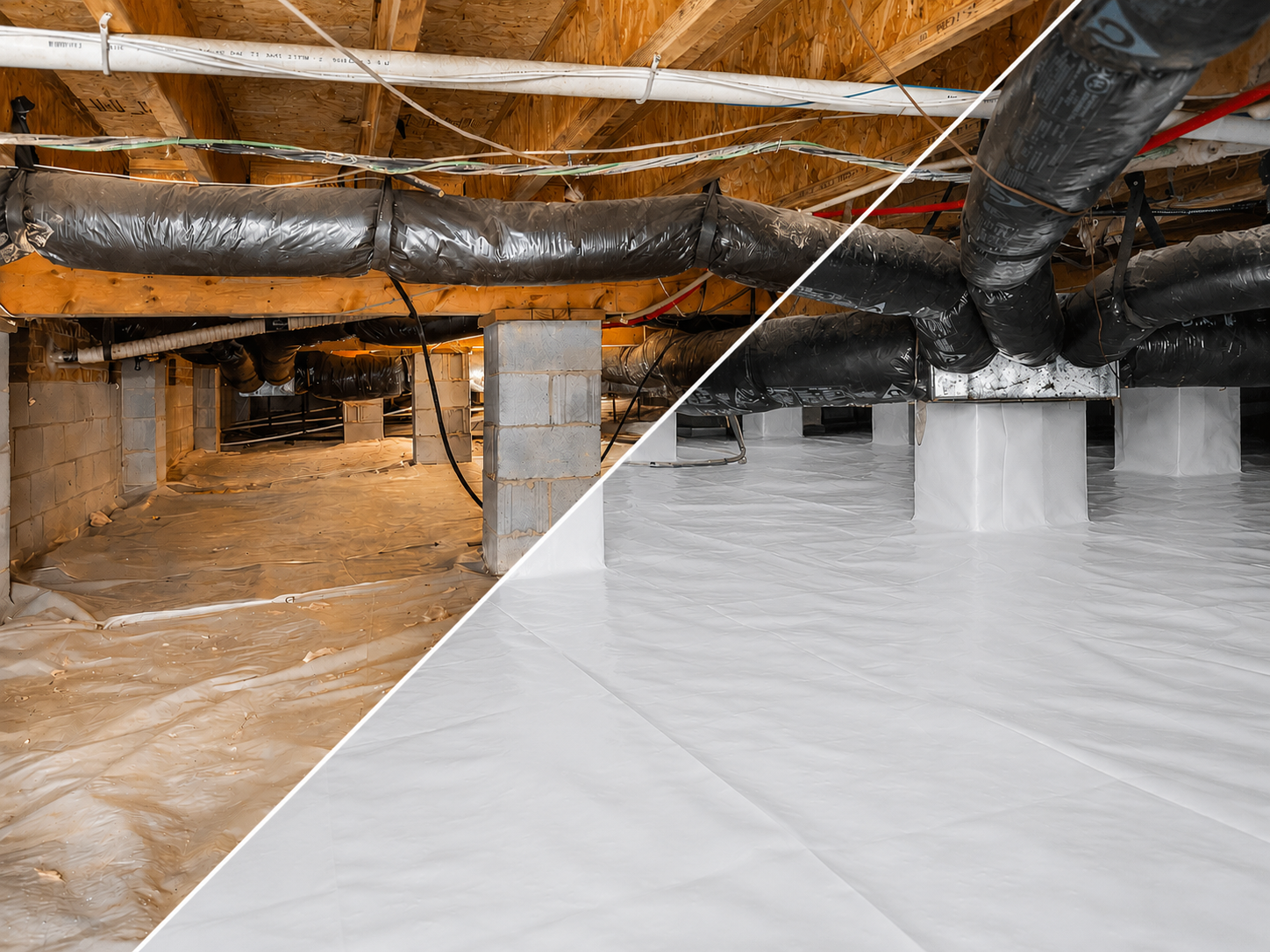
There is a part of your home that you probably don't think about very often — and that's exactly the problem.
The crawl space beneath your home is one of the most consequential and most neglected spaces in any house across Fuquay-Varina, Holly Springs, Angier, Lillington, Garner, and Willow Spring. What happens down there — moisture levels, air quality, structural conditions — directly affects the comfort, the health, and the long-term value of everything above it.
North Carolina's climate makes crawl space management particularly important. The combination of warm temperatures, high humidity, and significant seasonal rainfall creates ideal conditions for the moisture infiltration, mold growth, wood rot, and pest activity that turn a manageable crawl space situation into a very expensive one when left unaddressed.
The homeowners who end up with the most costly crawl space repairs across Wake, Harnett, and Johnston Counties are almost always the ones who noticed something — a musty smell, higher energy bills, uneven floors — and waited too long to have it looked at. This blog is for homeowners who want to understand what's happening in their crawl space before a small problem becomes a large one.
Why Crawl Spaces Are Vulnerable in North Carolina
To understand why crawl space problems are so common in the Fuquay-Varina area, it helps to understand what a crawl space is actually dealing with on a daily basis.
A crawl space is the unfinished area between the ground and the first floor of your home. In most homes across Wake County, Harnett County, and Johnston County, this space is anywhere from one to four feet in height — enough to crawl through for maintenance access but not a finished living area.
The ground beneath your home is a constant source of moisture. Even in dry conditions, soil releases water vapor that rises upward into the crawl space. In wet conditions — after rain, during humid summers, or in areas with poor drainage around the foundation — that moisture infiltration is significantly more pronounced.
Without proper moisture management, that water vapor accumulates in the crawl space. Wood framing, floor joists, and subfloor sheathing absorb moisture and become vulnerable to mold growth and wood rot. Insulation loses its effectiveness when saturated. HVAC equipment and ductwork in the crawl space are exposed to conditions that accelerate wear. And that moisture-laden air doesn't stay in the crawl space — it rises into the living areas of your home through a process called the stack effect, affecting indoor air quality and making your HVAC system work harder to maintain comfortable temperatures.
Warning Signs That Your Crawl Space Needs Attention
Homeowners across Fuquay-Varina, Holly Springs, and the surrounding areas of Wake, Harnett, and Johnston Counties don't always know there's a crawl space problem until it's visible from inside the home. Here are the most common warning signs worth paying attention to:
Musty or earthy odors inside the home. If your home smells like a basement — particularly in rooms on the first floor — moisture and mold activity in the crawl space is a very likely cause. That air is moving up through the floor system into your living areas.
Higher than normal energy bills. A crawl space that is allowing conditioned air to escape or unconditioned air to enter is a crawl space that is making your HVAC system work significantly harder than it should. If your heating and cooling costs have increased without a clear explanation, the crawl space is worth investigating.
Uneven or soft spots in the floor. When floor joists and subfloor sheathing absorb enough moisture to begin deteriorating, the floor above becomes noticeably uneven or soft underfoot. This is one of the later-stage warning signs — by the time you feel it in the floor, the wood damage in the crawl space is typically significant.
Visible mold or moisture on surfaces in the crawl space. If you or a contractor have looked into your crawl space and seen standing water, visible mold growth on wood surfaces, or a deteriorating vapor barrier — those conditions require immediate professional attention.
Condensation on windows or high indoor humidity. Excessive moisture rising from the crawl space contributes to elevated indoor humidity levels that can cause condensation on windows, warping of wood trim and cabinetry, and general discomfort in the living areas above.
Pest activity. Moisture-damaged wood in a crawl space creates ideal conditions for termites, wood-boring beetles, and other pests. If you have noticed pest activity in or around your home, the crawl space is one of the first places a licensed contractor should inspect.
What Crawl Space Repair Involves
The scope of a crawl space repair project in the Fuquay-Varina area depends on what the inspection reveals — but most professional crawl space repairs involve some combination of the following:
Drainage and moisture management. If water is entering the crawl space from outside — through foundation walls, through the ground, or due to poor grading around the home — the source of that moisture entry needs to be addressed before any interior work can be effective. This may involve exterior grading corrections, foundation waterproofing, or the installation of a drainage system within the crawl space.
Mold remediation. If mold is present on wood framing, joists, or sheathing in your crawl space, licensed mold remediation is required before encapsulation can proceed. Encapsulating over active mold without treating it first creates conditions where the mold continues to grow beneath the encapsulation system — which is a significantly worse outcome than the original problem.
Wood repair and structural remediation. Joists, beams, and sheathing that have been damaged by moisture and rot may need to be sistered — reinforced with new lumber alongside the damaged member — or in more severe cases, fully replaced. Structural repairs in the crawl space require a licensed general contractor and in most cases require a building permit in Wake County, Harnett County, or Johnston County.
Vapor barrier installation or replacement. A vapor barrier is a polyethylene sheet installed on the ground of the crawl space to reduce moisture evaporation from the soil into the space above. Many older homes across the Fuquay-Varina area have thin, torn, or improperly installed vapor barriers that provide minimal protection. Replacing an inadequate vapor barrier with a properly specified and installed product is one of the most cost-effective steps in crawl space moisture management.
Full encapsulation. Crawl space encapsulation is the most comprehensive solution for moisture management — and the one that produces the most significant and lasting results. A full encapsulation involves sealing the crawl space completely from the outside environment. This includes a heavy-duty liner on the ground and up the foundation walls, sealed foundation vents, insulation on the foundation walls rather than between the floor joists, and in many cases a dehumidifier sized for the specific crawl space volume to maintain controlled humidity levels year-round.
An encapsulated crawl space functions as a conditioned or semi-conditioned space — dramatically reducing moisture infiltration, improving indoor air quality, extending the life of structural wood members, and improving the energy efficiency of the home above.
What Crawl Space Encapsulation Costs — and What It Costs to Wait
Crawl space encapsulation is an investment — and like most investments, the return depends significantly on the condition of the crawl space when the work is done and how long the problem has been allowed to develop.
A professional crawl space encapsulation for a home in the Fuquay-Varina area will vary in cost depending on the square footage of the crawl space, the extent of any existing damage that needs to be remediated first, and the specific system being installed. The honest answer is that this is a project where you need a licensed contractor to inspect your specific crawl space and give you a real number — because the variables are too significant for a meaningful ballpark without seeing the space.
What we can tell you clearly is what it costs to wait. Water damage is the most destructive and most expensive problem a home can develop. Structural wood that has deteriorated past a certain point cannot be repaired — it must be replaced. Mold that has spread through a crawl space requires professional remediation that adds significant cost to any encapsulation project. And the energy costs, indoor air quality impacts, and comfort issues that an unmanaged crawl space creates accumulate every month the problem goes unaddressed.
The homeowners across Wake County and Harnett County who spend the most on crawl space work are almost always the ones who waited the longest to address it.
What the McLeod Home Services Crawl Space Process Looks Like
At McLeod Home Services, crawl space repair and encapsulation projects follow the same structured process we apply to every project we complete across Fuquay-Varina, Holly Springs, Angier, Lillington, Garner, and Willow Spring.
It starts with a thorough inspection — we get into the crawl space, assess existing conditions, identify the source and extent of any moisture infiltration, evaluate the condition of structural wood members, and document everything we find. That inspection informs a detailed scope of work and a real proposal — not a ballpark — built from confirmed pricing with our licensed trade partners and vendors.
If mold remediation is required before encapsulation can proceed, we coordinate that through licensed remediation partners and sequence the work correctly so that encapsulation is installed over a clean, properly prepared surface. Structural repairs are handled by our team with licensed contractors and inspected as required by Wake County, Harnett County, or Johnston County building authorities.
Every crawl space project is tracked through our JobTread client portal — giving you real-time visibility into the scope, schedule, and budget from the moment work begins through the final walkthrough and warranty documentation.
If you have noticed any of the warning signs we covered in this blog — or if you simply haven't had your crawl space inspected in a while and want to know what's going on down there — we would be glad to take a look.
No pressure. No obligation. Just a straightforward assessment from a licensed, insured general contractor who takes crawl space conditions as seriously as any other part of your home.
