
Outdoor Living Spaces: What Homeowners in Fuquay-Varina Should Know Before Building a Deck, Screened Porch, or Pergola
If there is one home improvement project that consistently delivers a return on investment, expands usable living space, and genuinely improves the daily quality of life for homeowners across Fuquay-Varina, Holly Springs, Angier, Lillington, Garner, and Willow Spring — it's an outdoor living space.
A well-designed deck, screened porch, or pergola does something that most interior renovation projects can't quite replicate. It changes how a family uses their home. It creates a gathering place. It extends the livable square footage of the house outward in a way that feels natural, comfortable, and distinctly North Carolina.
And right now — in the middle of summer — it's exactly the kind of project homeowners across Wake, Harnett, and Johnston Counties are thinking about most.
Whether you're envisioning a simple pressure-treated deck off the back door, a fully screened outdoor room with a ceiling fan and recessed lighting, or a timber-frame pergola over a patio that anchors your entire backyard — there are things worth knowing before you start making calls to contractors. This week we're covering all of it.
The Most Popular Outdoor Living Options in North Carolina — and How They Differ
Before diving into the planning details, it helps to understand what distinguishes the most common outdoor living structures — because the right choice for your home depends on how you plan to use the space, what your budget looks like, and what your property can support.
Decks
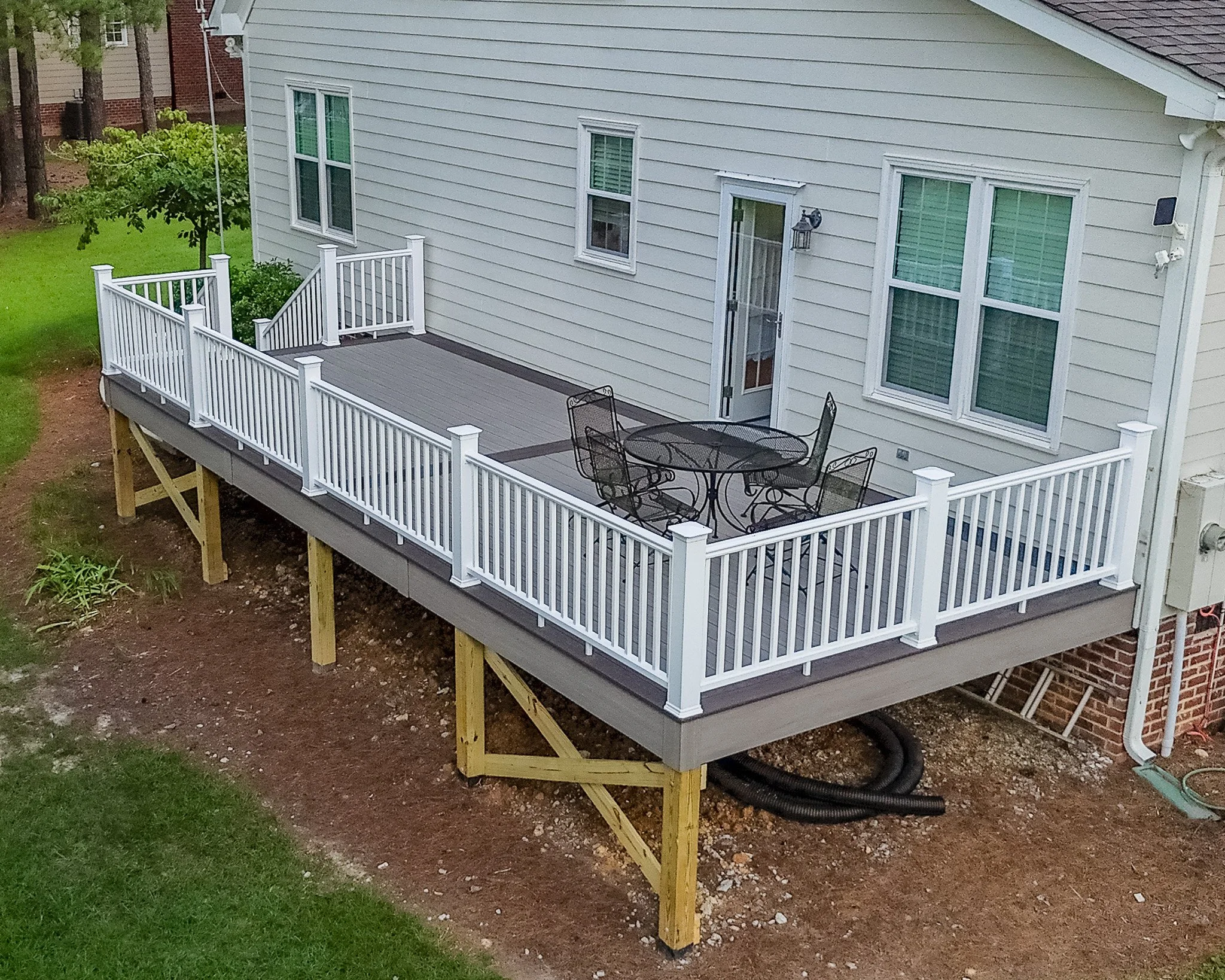
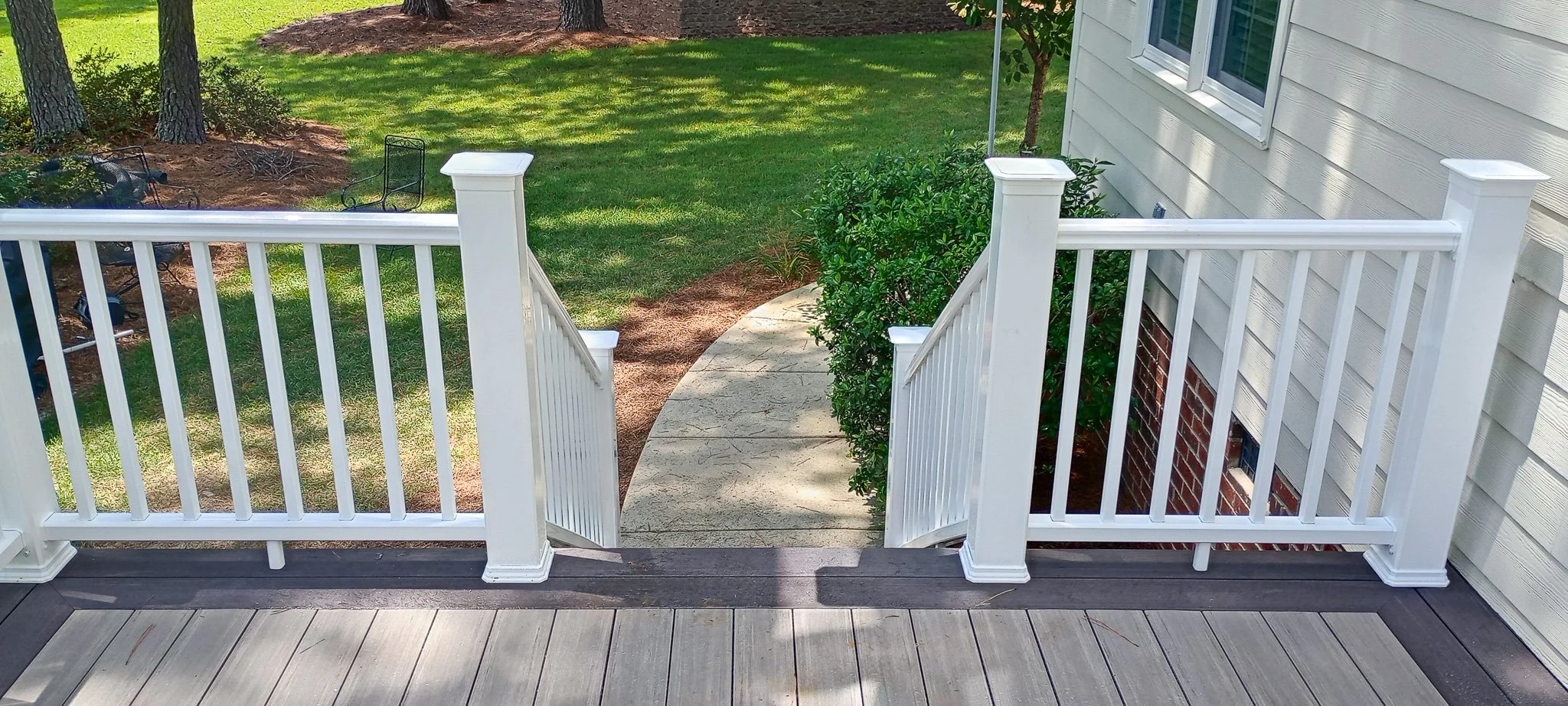
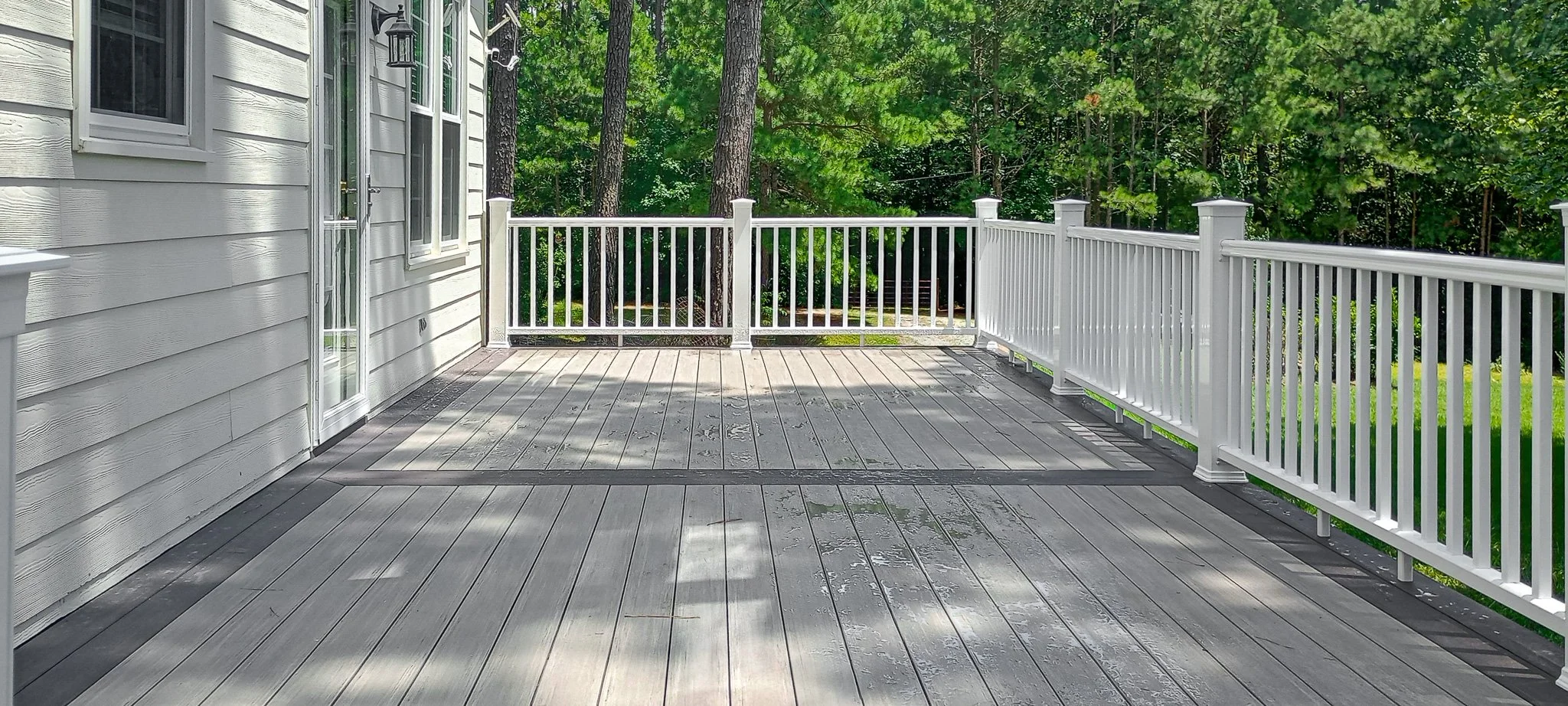
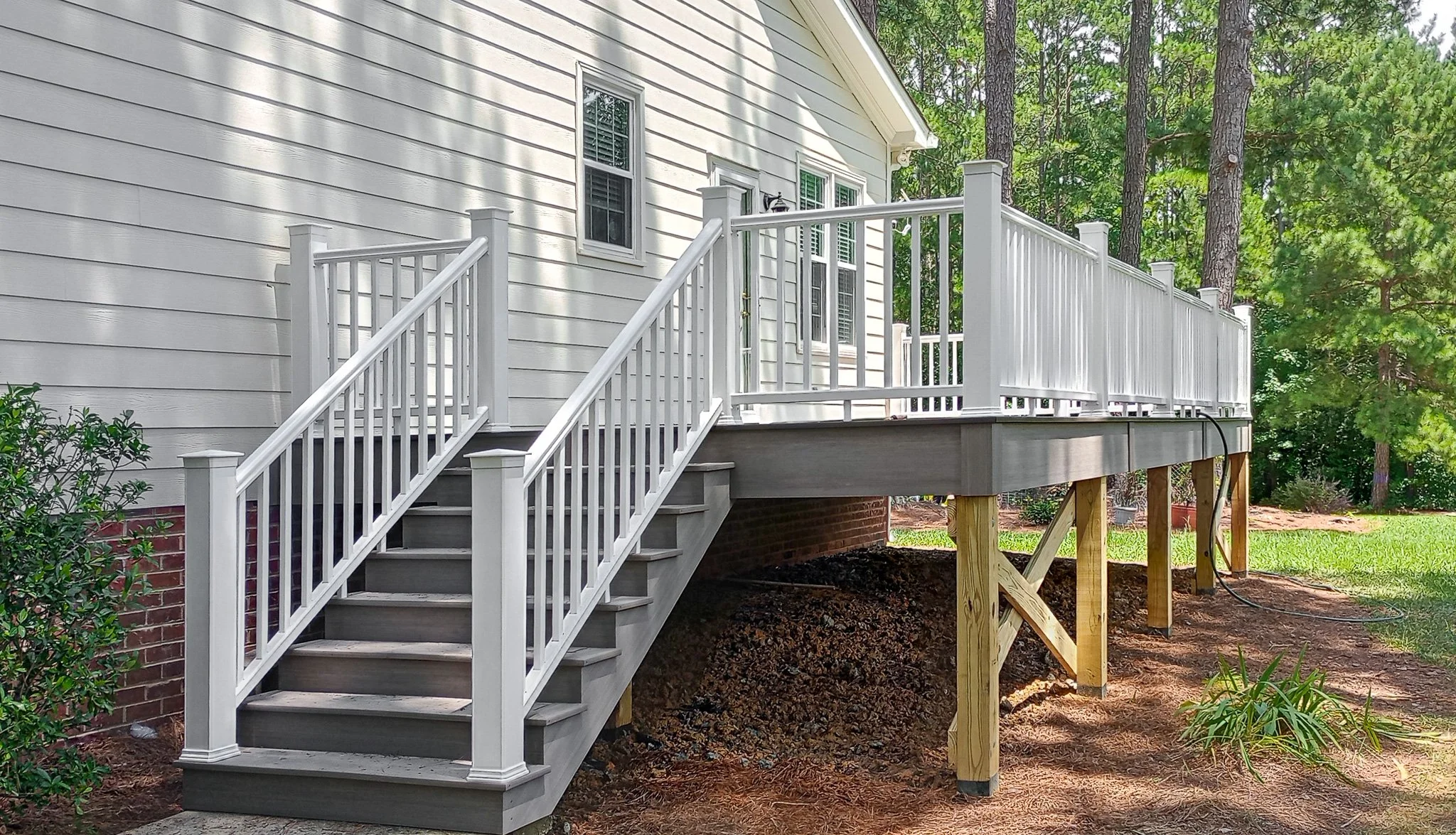
A deck is an elevated or grade-level platform — typically constructed from pressure-treated lumber, composite decking, or hardwood — attached to or adjacent to the home. Decks are among the most requested outdoor living projects for homeowners across the Fuquay-Varina area because they offer a relatively straightforward path to expanding usable outdoor space at a wide range of price points.
The material you choose for your deck surface has a significant impact on both the cost and the long-term maintenance requirements of the project. Pressure-treated lumber is the most accessible entry point and performs well in North Carolina's climate when properly maintained. Composite decking — products like Trex, TimberTech, and Fiberon — costs more upfront but requires significantly less maintenance over time and resists the moisture, UV exposure, and insect activity that the Fuquay-Varina area's climate produces. Hardwood decking options like Ipe and Cumaru offer a premium aesthetic and exceptional durability but come with a higher material cost and specific installation requirements.
Decks in North Carolina require building permits when they exceed certain size and height thresholds — and in Wake County, Harnett County, and Johnston County, deck construction is inspected for structural adequacy, ledger attachment, footing depth, and railing compliance. A licensed general contractor will pull the required permits and manage the inspection process on your behalf.
Screened Porches
A screened porch is an enclosed outdoor room — typically attached to the home — with a roof structure and screened walls that allow airflow while keeping insects out. For homeowners across Fuquay-Varina, Holly Springs, and the surrounding areas of Wake, Harnett, and Johnston Counties, screened porches are often the single most transformative outdoor living addition a home can receive.
North Carolina's spring and fall seasons are among the most beautiful in the country — and a screened porch allows homeowners to enjoy that weather comfortably without the bugs that make unscreened outdoor spaces frustrating during peak months. A well-designed screened porch functions as a true additional room — one that gets used for morning coffee, family dinners, evening conversations, and everything in between.
Screened porches vary significantly in scope and cost depending on whether they are being added to an existing deck or patio, whether a new foundation is required, what the roof structure involves, and what finishes and features are included. Ceiling fans, recessed lighting, outdoor-rated flooring, built-in screens versus screen doors, and electrical outlets all affect both the cost and the usability of the finished space.
Screened porch additions in Wake County, Harnett County, and Johnston County require building permits and inspections — including structural, electrical, and final inspections depending on the scope of the project.
Pergolas
A pergola is an open-roof structure — typically constructed from wood, composite, or aluminum — that defines an outdoor space without fully enclosing it. Pergolas are popular in the Fuquay-Varina area as a way to create a defined outdoor room over a patio, beside a pool, or within a larger backyard landscape without the full commitment of a roofed structure.
Modern pergola options range from simple post-and-beam structures built on site by a licensed contractor to engineered aluminum systems with adjustable louvers that can be opened or closed depending on weather conditions. Louvered pergola systems — which allow homeowners to control sun, shade, and rain exposure — have grown significantly in popularity across Wake County and Harnett County in recent years as the technology has become more accessible.
Pergolas may or may not require a building permit depending on size, attachment method, and local jurisdiction requirements. A licensed general contractor serving the Fuquay-Varina area will assess the permit requirements for your specific project before any work begins.
Planning Your Outdoor Living Space: What to Think Through Before You Call a Contractor
The homeowners who end up with the outdoor living spaces they actually wanted — rather than a version that fell short of their vision or exceeded their budget — are the ones who did some thinking before the first contractor meeting. Here's what's worth working through in advance.
How will you actually use the space?
The most important question in outdoor living design isn't about materials or aesthetics — it's about use. A family that wants a space for large outdoor gatherings has different needs than a couple that wants a quiet morning coffee spot. A homeowner who wants to grill and entertain needs different features than one who primarily wants a shaded reading area.
Being specific about how you plan to use your outdoor space — and communicating that clearly to your contractor during the initial site visit — is what allows a well-designed project to emerge rather than a generic one.
What does your property allow?
Lot size, setback requirements, HOA restrictions, existing drainage patterns, and the orientation of your home relative to the sun all affect what is possible on your specific property. In many neighborhoods across Fuquay-Varina, Holly Springs, and the surrounding areas of Wake, Harnett, and Johnston Counties, HOA approval is required before any outdoor structure can be permitted or built. A licensed general contractor will help you identify these requirements early — before design work begins — so you're not planning a project that can't be approved.
What is your realistic budget?
Outdoor living projects in the Fuquay-Varina area vary widely in cost depending on scope, materials, and complexity. A simple pressure-treated deck is a very different investment than a fully finished screened porch with electrical, ceiling fans, and premium flooring. Being honest with yourself — and with your contractor — about your budget range before the project is designed allows everyone to make decisions that result in a finished project you're satisfied with rather than one that required painful compromises mid-construction.
As we covered in our blog on why renovation projects go over budget — a contractor who designs a project without a clear understanding of your budget is a contractor who is setting you up for a difficult proposal conversation later.
What materials do you want and what maintenance are you willing to do?
Outdoor living materials in North Carolina need to stand up to heat, humidity, UV exposure, and occasional severe weather. The material choices you make at the planning stage directly affect both the upfront cost and the long-term maintenance commitment of your outdoor living space. Pressure-treated lumber requires periodic staining or sealing to maintain its appearance and resist moisture damage. Composite decking requires virtually no maintenance beyond occasional cleaning. Cedar and other natural wood options fall somewhere in between.
There is no universally right answer — only the answer that fits your priorities, your budget, and your willingness to maintain the finished product over time.
What the Construction Process Looks Like
For homeowners across Fuquay-Varina, Holly Springs, Angier, and the surrounding areas of Wake, Harnett, and Johnston Counties who haven't been through an outdoor living project before — here's a general picture of what the construction process involves from start to finish.
Site preparation comes first — grading, layout, and in most cases the installation of concrete footings that will support the structural posts of your deck, porch, or pergola. Footing depth in North Carolina is determined by local frost line requirements and soil conditions and must be inspected before concrete is poured on permitted projects.
Framing follows — the structural skeleton of the project including posts, beams, joists, and in the case of a screened porch, the roof structure and wall framing. Framing is inspected on permitted projects before decking or sheathing is installed.
Decking, roofing, screening, and finish work complete the project — including any electrical work for lighting, ceiling fans, or outlets, which must be performed by a licensed electrician and inspected before the project can receive a final approval.
At McLeod Home Services, every outdoor living project across Wake, Harnett, and Johnston Counties follows our full 10-step Design and Construction Process — from initial inquiry and discovery call through pre-construction planning, detailed proposal, contract and permitting, construction management with licensed trade partners, final walkthrough, and post-project warranty support. Every project is tracked in real time through our JobTread client portal so you always know exactly where your project stands.
Why Summer Is the Right Time to Start Planning
If you are thinking about an outdoor living space for your home in Fuquay-Varina, Holly Springs, Angier, Lillington, Garner, or Willow Spring — now is the right time to start the conversation, even if you don't want construction to begin until fall.
The most comfortable seasons for outdoor living in North Carolina — spring and fall — are also the seasons when contractor schedules fill up fastest. Homeowners who start the planning conversation in summer, complete their pre-construction and design phase, and have a signed contract in place before peak demand hits are the ones who get their projects built on the timeline they want.
Waiting until October to start the conversation about a screened porch you want to enjoy next spring means competing for contractor availability with every other homeowner who had the same idea. Starting now means getting ahead of that curve.
If you're ready to talk through an outdoor living project — a deck, screened porch, pergola, or a combination of all three — for your home in Fuquay-Varina, Holly Springs, Angier, Lillington, Garner, Willow Spring, or anywhere across Wake, Harnett, or Johnston Counties — we'd love to hear what you're envisioning.
No pressure. No obligation. Just a straightforward conversation with a licensed, insured general contractor who has built outdoor living spaces across this market and knows what works.
👉 Contact McLeod Home Services to Start the Conversation
