
Why DIY Can Cost More Than Hiring a Professional
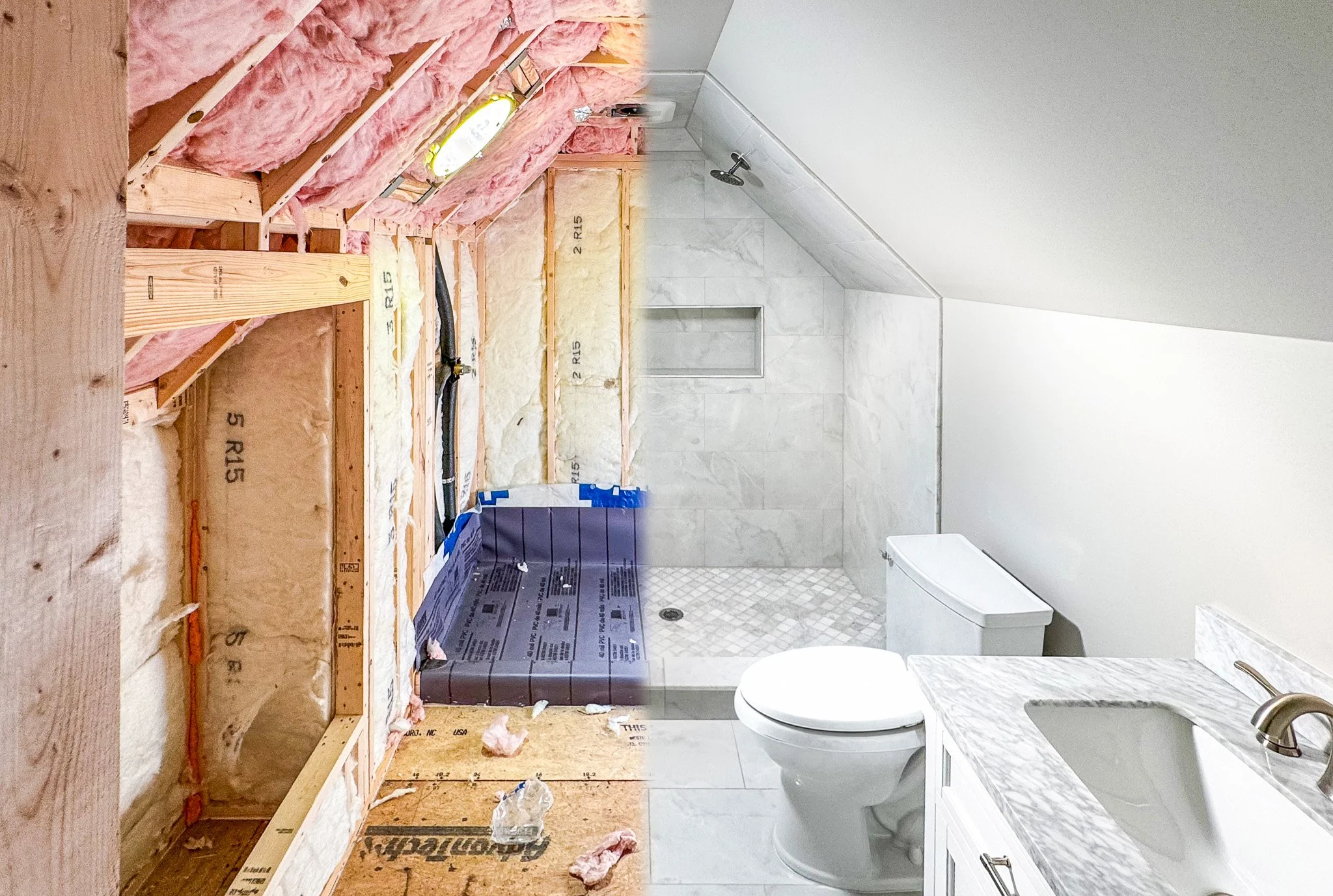
There's a version of the DIY home improvement story that ends well. A motivated homeowner watches a few tutorials, picks up the right tools, puts in a weekend of work, and walks away with a finished project and money still in their pocket.
That version exists. But it's not the version we see most often across Fuquay-Varina, Holly Springs, Angier, and the surrounding areas of Wake, Harnett, and Johnston Counties.
The version we see more frequently is a homeowner who started a project themselves, ran into something they didn't expect, made a decision they weren't qualified to make, and ended up calling a licensed general contractor to fix what went wrong — often at a cost that significantly exceeded what the original project would have cost if a professional had handled it from the start.
This isn't a criticism of homeowners who want to be hands-on with their homes. It's a realistic look at where DIY makes sense, where it doesn't, and why the true cost of doing it yourself is almost always higher than the upfront estimate on the back of a YouTube video.
The Costs You Don't See Coming
The appeal of DIY remodeling is straightforward — skip the labor cost, keep the money. And on truly simple projects, that math sometimes works. Painting a room. Replacing a light fixture on an existing circuit. Swapping out cabinet hardware. These are projects where a capable homeowner with the right tools can reasonably manage the work without significant risk.
But for most remodeling projects in the Fuquay-Varina area — kitchen remodels, bathroom renovations, additions, structural changes, electrical upgrades, plumbing work — the costs that don't show up in the initial DIY plan are the ones that matter most.
Tool and equipment costs. Professional remodeling contractors in Wake County and Harnett County arrive with tools and equipment that represent years of investment. A tile saw, a compound miter saw, a framing nailer, a laser level, specialized plumbing tools — the cost of purchasing or even renting the right equipment for a single project can quickly consume a significant portion of the labor savings a homeowner was counting on.
Material waste. Experienced remodeling contractors know how to calculate material quantities accurately, order appropriately, and cut efficiently to minimize waste. First-time DIYers on a kitchen or bathroom renovation in the Fuquay-Varina area frequently over-order some materials, under-order others, and generate substantially more waste through inexperienced cuts and installation errors. That waste is real money.
Time cost. A licensed tile installer in Wake County can complete a bathroom tile installation in a day that takes an inexperienced homeowner a weekend — or two weekends. Time away from work, family, and normal life has real value. For homeowners in demanding professional roles across Wake, Harnett, and Johnston Counties, an honest accounting of their time cost often flips the DIY math entirely.
The Permit Problem
One of the most significant hidden costs of DIY remodeling in North Carolina is the permit problem — and it catches homeowners off guard more often than almost anything else.
In Wake County, Harnett County, and Johnston County, building permits are required for most remodeling work that goes beyond simple cosmetic updates. Electrical work, plumbing modifications, structural changes, additions, HVAC work — all of it requires permits, inspections, and sign-off from a licensed inspector before walls are closed and work is considered complete.
A homeowner who completes unpermitted work on their Fuquay-Varina or Holly Springs property faces real consequences. When the home is sold, a home inspector or the buyer's agent will frequently identify unpermitted work — and the seller is typically required to disclose it or remediate it before closing. In some cases, unpermitted work must be opened up, inspected, and redone at the homeowner's expense before a certificate of occupancy or a permit can be issued after the fact.
Beyond the resale impact, unpermitted electrical or structural work creates liability and safety risks that no amount of DIY labor savings justifies.
A licensed general contractor in North Carolina pulls all required permits on your behalf, ensures all work passes inspection, and closes the job with the documentation that protects your home's value and your family's safety. That's not a line item on an invoice — it's a fundamental part of what you're paying for.
When DIY Goes Wrong — The Real Cost
The most expensive version of DIY remodeling isn't the project that takes twice as long as planned. It's the project where something goes wrong in a way that causes damage, creates a safety hazard, or requires a licensed professional to undo and redo the work correctly.
We've walked into homes across the Fuquay-Varina area where a homeowner attempted a bathroom renovation and installed a shower without proper waterproofing — leading to water infiltration behind the tile, mold growth in the wall cavity, and eventual structural damage to the subfloor and framing. The cost of that repair was multiples of what a professional bathroom renovation would have cost from the start.
We've seen DIY electrical work in Wake County homes that failed inspection, required a licensed electrician to identify and correct every non-compliant connection, and ultimately cost more in remediation than a full electrical rough-in would have from a licensed trade partner.
We've seen load-bearing walls removed without proper engineering, structural headers undersized, and tile installed over an inadequate substrate that cracked within a year.
None of these homeowners set out to create expensive problems. They set out to save money. The gap between intention and outcome is almost always the same thing: a lack of knowledge about what they didn't know.
Where DIY Makes Sense — and Where It Doesn't
We're not suggesting that homeowners in Fuquay-Varina, Holly Springs, Angier, and the surrounding areas of Wake, Harnett, and Johnston Counties should never touch their own homes. There's a reasonable range of projects where a motivated, capable homeowner can do quality work without significant risk.
DIY is generally reasonable for: interior painting, landscaping and yard work, minor fixture swaps on existing circuits and supply lines, furniture assembly, cabinet hardware replacement, and simple finish work like caulking or touch-up painting after a professional renovation is complete.
DIY carries significant risk for: anything involving structural changes, electrical panel work or new circuit installation, plumbing supply or drain modifications, waterproofing in wet areas, tile installation in showers or wet areas, HVAC modifications, roofing, and any project that requires a building permit in Wake County, Harnett County, or Johnston County.
The dividing line is roughly this: if the project requires a permit, requires a license to perform legally, or if a failure would be expensive or dangerous to remediate — hire a licensed professional. The savings aren't worth the risk.
The Right Way to Think About the Cost Comparison
When homeowners in the Fuquay-Varina area compare the cost of DIY against hiring a licensed general contractor, the honest comparison isn't labor cost vs. zero. It's the full loaded cost of the DIY attempt — tools, materials, waste, time, permit risk, and the probability of remediation — against the all-in cost of a professional who brings expertise, equipment, licensed trade partners, permit management, and a workmanship warranty to your project.
When you run that comparison honestly, the gap between DIY and professional narrows considerably on most projects — and on projects involving structural work, waterproofing, electrical, or plumbing, it frequently inverts entirely.
We work with homeowners across Fuquay-Varina, Holly Springs, Angier, Lillington, Garner, and Willow Spring who started projects themselves and needed help finishing them correctly. We never judge that — we just focus on getting the project to where it should be. But if you're at the planning stage of a kitchen remodel, bathroom renovation, home addition, deck, screened porch, or whole-home remodel in Wake, Harnett, or Johnston County — we'd encourage you to have the real cost conversation before you decide.
We'd be glad to walk you through what a professional project actually costs, what it includes, and why the value of doing it right the first time almost always outweighs the appeal of doing it yourself.
No pressure. No obligation. Just an honest conversation with a licensed, insured general contractor who respects your budget and your time.
👉 Contact McLeod Home Services to Schedule Your Consultation
