
Maintenance-Free Materials: What’s Really Worth It (and When to Use Them)
The Appeal of “Maintenance-Free” 🧽✨
Homeowners love the idea of maintenance-free materials — and for good reason. Fewer repairs, less upkeep, and more time enjoying your home instead of working on it.
But here’s the reality we often explain to homeowners in Fuquay-Varina and throughout Southern Wake, Harnett, and Johnston Counties:
No material is completely maintenance-free — but some are absolutely worth it when used in the right places.
Understanding where these materials perform best (and where they don’t) helps homeowners make smarter long-term decisions.
What “Maintenance-Free” Really Means 🔍
When a material is described as maintenance-free, it usually means:
No painting or staining
Resistant to moisture and rot
Minimal cleaning required
Long service life in the right conditions
It doesn’t mean the material is indestructible or appropriate everywhere. Placement matters just as much as the material itself.
Where Maintenance-Free Materials Shine 🌧️☀️
Certain areas of the home benefit greatly from low-maintenance options, especially in North Carolina’s climate.
Common examples include:
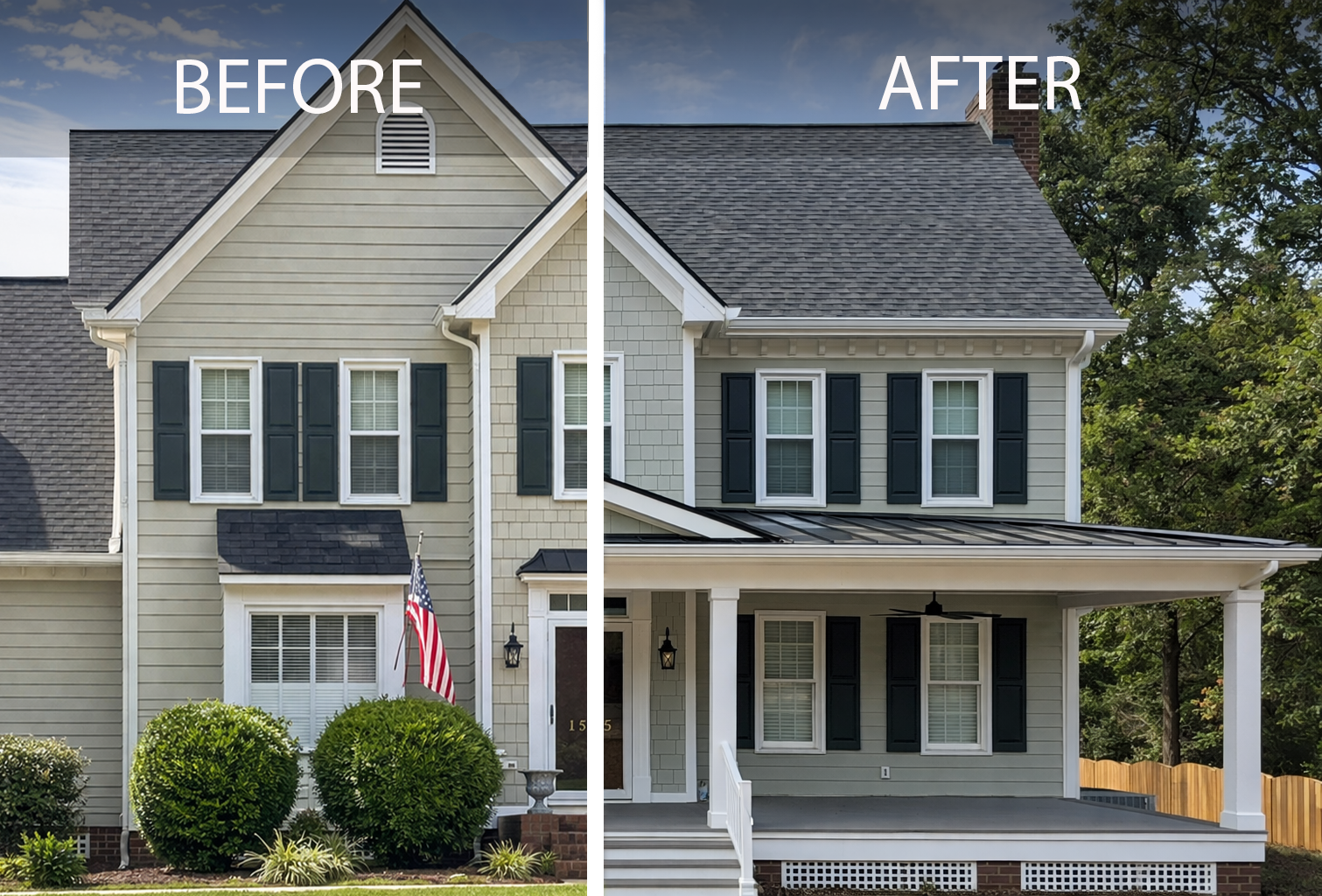
Exterior trim and columns
Porch ceilings and railings
Carports and covered structures
High-moisture interior areas
Utility and laundry spaces
In these locations, exposure to humidity, temperature changes, and moisture can quickly wear down traditional materials.
PVC: A Strong Choice for Moisture-Prone Areas 💧🧱
PVC materials are commonly used for:
Exterior trim
Porch details
Column wraps
Decorative elements
PVC doesn’t rot, absorb moisture, or require painting for protection. Occasional cleaning is usually all that’s needed to keep it looking good.
That makes it a great option for areas exposed to weather or ground moisture.
Aluminum: Durable and Low-Maintenance 🏗️
Aluminum is often used for:
Carports
Railings
Porch framing
Structural accents
It’s lightweight, corrosion-resistant, and holds up well over time. Aluminum doesn’t require the same upkeep as wood and performs well in outdoor environments.
Composite Materials: A Middle Ground 🪵➡️🧪
Composite products are often used for:
Decking
Fascia boards
Exterior accents
They offer improved durability over traditional wood while maintaining a familiar appearance. Composite materials still benefit from cleaning, but they don’t require the same level of maintenance as wood.
When Traditional Materials Still Make Sense 🧠
Maintenance-free isn’t always the best choice.
In some interior applications or low-exposure areas, traditional materials:
Offer more flexibility
Cost less upfront
Perform perfectly well with basic care
The goal isn’t to eliminate maintenance everywhere — it’s to reduce it where it matters most.
Cost vs. Value: Looking Long-Term 💸📈
Maintenance-free materials often cost more upfront, but they can:
Reduce repainting or replacement costs
Minimize future repairs
Hold up better over time
Improve peace of mind
When homeowners look at the full lifespan of a material, the value often becomes clearer.
How We Help Homeowners Choose the Right Materials 🛠️
At McLeod Home Services, we don’t push one product for every situation.
We help homeowners evaluate:
Exposure to moisture and weather
Usage patterns
Budget and long-term plans
Maintenance preferences
The best material choice is the one that fits the home — not just the trend.
A Final Thought for Homeowners 💭
Maintenance-free materials can be a great investment when used thoughtfully.
Understanding where they perform best helps homeowners balance cost, durability, and long-term comfort — and makes maintaining a home feel a lot more manageable.
